

Positioning at the Table
When your child is wiggly, slouching, standing up, or constantly sliding out of their chair, mealtime can feel challenging. Positioning plays a large role in creating a successful mealtime routine. When your child’s body feels stable during mealtime, the action of eating can feel more comfortable.
Good positioning supports:
-
More efficient mealtimes
-
Greater success exploring foods
-
Safer chewing and swallowing
-
Improved digestion
-
Higher intake of foods
-
More opportunities for socialization
-
Healthy nutrition and growth
-
Increased independence with self-feeding
-
Reduced risk of choking
Poor positioning during meals can increase safety risks and limit mealtime engagement, which may impact nutrition intake and growth.
Proper seating and positioning changes as children grow. The sections below show positioning strategies that are based on common developmental stages.
Seating Suggestions Based on Age
Bottle Feeding Positions for Infants (0-12 months)
Positioning a baby appropriately during mealtime is important for encouraging a safe and effective eating experience. Proper positioning for babies supports calm and more successful mealtime experiences.
Cradle Position
Best for: All babies, especially those 0-6 months old.
How to:
-
Baby’s head rests in the fold of your arm
-
Baby’s body is supported by your arm and chest
-
Baby’s head is higher than hips
-
Baby is in an elevated position

Photo inspired from Holt International's Feeding and Positioning Manual
Side-lying Position
Best for: All babies 0-12 months, especially those who were premature, feel tired quickly, or who experience reflux/spit-up.
How to:
-
Baby lies on their side
-
Placed on lap or on a pillow
-
Baby’s head and body facing away from your body
-
Use your hands to support baby’s head and body
-
Baby’s head is higher than hips
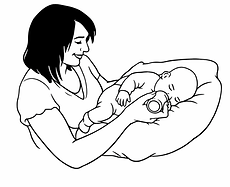
Photo inspired from Holt International's Feeding and Positioning Manual
Reclined position
Best for: Babies who spit up or caregivers that require support.
How to:
-
Baby reclined on your elevated knees or pillow
-
Facing you
-
Baby's head rests on your knees or cushion
-
Body supported by your legs and pillows
Seated Position for Infants (6-12 months)
Upright seated position
Best for: 6-12 month olds that are exploring foods with a spoon, fingers, or drinking from a cup who have good head and neck control that require little to no support sitting upright.
How to:
-
Supportive baby seat or high chair that faces you
-
Firm back support
-
Hips all the way back into seat
-
Hips and knees bent at about 90 degrees
-
Feet resting on solid surface
-
Tray at mid-rib level
-
Fully upright
If a feeding position doesn’t feel comfortable for you or your baby, it’s okay to try a different one. It’s normal to experiment and find the options that fit best.
Why it matters: When babies feel stable through their hips and feet, they can focus on learning to chew, swallow, and explore food instead of trying to stay upright.
Children Ages 1 - 2 Years
Toddlers are busy, and their bodies show it. Good positioning during mealtime can help them slow down and focus on eating.
High chair positioning
How to:
-
Back supported by the chair with upright posture
-
Head facing forward in a neutral position with chin slightly tucked down
-
Shoulders facing forward
-
Hips all the way back and bent at about 90°
-
Knees bent at 90°
-
Feet supported with footrest
-
Arms supported by tray, but free to explore food
Common signs positioning needs adjusting:
-
Sliding forward
-
Standing in the chair
-
Leaning far back
-
Constant fidgeting
Children Ages 2-3 Years
At this age, most children have refined fine motor skills for scooping, stabbing with a fork, and drinking from an open cup. Supported posture promotes hand control during mealtime.
booster seat, or dining chair
Choose the seat that provides the best support for your child. If your child seems very wiggly in a booster seat, they may be ready to try a dining chair. If you notice a lot of movement in a dining chair, they may feel more stable in a booster or child seat. Look for a position that provides support, comfort, and a neutral body posture while your child is eating.
What to look for:
-
Back supported by the chair with upright posture
-
Head centered in neutral position with chin slightly tucked down
-
Shoulders facing forward
-
Hips fully back in chair and bent at 90 degrees
-
Knees bent at 90°
-
Feet flat on floor or supported by footrest
-
Arms supported by tray, but free to explore food
Watch for:
-
Leaning heavily on one arm
-
Head very close to the plate
-
Kneeling in the chair
-
Sliding forward
Children Ages 3 and Up
At this age, children benefit from seating that encourages upright posture, stability, and engagement during mealtime.
Upright seated forward position - booster seat or dining chair
What to look for:
-
Seated in a stable chair, booster seat, or high chair that supports their body size
-
Back supported by chair
-
Child should face caregivers or peers who are eating with them
-
Head neutral and forward
-
Knees bent at 90°
-
Hips back into the seat
-
Feet supported by floor/footrest
-
Caregivers can assist with utensils, food, or cups when needed, but the child should have opportunities to practice their self-feeding skills
The 90-90-90 Rule
A simple way to check your child’s positioning during meals:
-
Hips at about 90°
-
Knees at about 90°
-
Ankles at about 90° (with feet supported)
When the feet are supported, the rest of the body is better able to stay upright and stable during mealtime.
Seating Equipment You Can Find at Home
Small adjustments to seating can make a big difference. Many helpful positioning supports can be created using items you already have at home.
-
A small box or stool under the feet
-
A stack of sturdy books
-
A rolled towel at the lower back
-
A booster seat to adjust height
-
Moving the chair closer to the table
Disclaimer
This website is intended for educational purposes only and does not constitute medical advice, diagnosis, or treatment. The information provided is meant to serve as a general resource for families and is not a substitute for professional evaluation or guidance. Every child is unique, and strategies or recommendations described on this site may not be appropriate for all children, particularly those with complex needs such as Pediatric Feeding Disorder (PFD) or Avoidant Restrictive Food Intake Disorder (ARFID). Always consult a licensed healthcare professional — including your pediatrician, occupational therapist, gastroenterologist, or feeding specialist — before implementing any new feeding strategies or interventions. If you have concerns about your child’s feeding, oral motor skills, or nutritional intake, please seek guidance from a qualified provider.